


Growing Up with Emotionally Self-Focused Parents: Why Healing Can Feel So Difficult

“Children don’t choose the families they’re born into. But as adults, we can choose to understand our past, reclaim our voice, and create a healthier future.”— Patricia A. Grenelle, PsyD
Have you ever found yourself apologizing for things that weren’t your fault? Do you struggle to say no without feeling guilty? Do you constantly wonder if you’re “too sensitive” or second-guess your own memories and feelings?
If so, you’re not alone.
Many adults who grew up with emotionally self-focused parents carry invisible wounds long after childhood has ended. While every family is different, growing up in an environment where a parent’s emotional needs consistently came before a child’s can shape the way we see ourselves, our relationships, and the world around us.
As both a retired forensic psychologist and someone who survived childhood trauma, I understand these patterns from two perspectives. I’ve seen them professionally for decades, and I’ve lived them personally. Healing isn’t about assigning blame—it’s about understanding what happened so you can move forward with greater clarity, compassion, and hope.

What Does “Emotionally Self-Focused” Mean?
An emotionally self-focused parent often expects the family to revolve around their needs, emotions, or image. They may seek constant validation, struggle with empathy, dismiss a child’s feelings, or react negatively when their authority is questioned.
Some parents display these behaviors consistently, while others do so only during times of stress. Regardless of the reason, children growing up in these environments often learn that their own emotional needs are less important than keeping the peace.
Over time, this becomes their “normal.”
Learning to Ignore Your Own Needs
Children naturally depend on their parents for love, safety, and guidance. When those needs are repeatedly overlooked, criticized, or minimized, children often adapt in remarkable—but unhealthy—ways.
Instead of asking:
“What do I need?” they begin asking: “What does everyone else need from me?”
As adults, these survivors frequently:
Put others first at their own expense
Feel uncomfortable accepting help
Believe their needs are selfish or unimportant
This pattern may have helped them survive childhood, but it often leads to exhaustion, resentment, and burnout later in life.
Becoming the Family Peacekeeper
Many children raised in emotionally self-focused families become experts at reading moods.
They quickly learn how to sense tension before anyone else notices it. They monitor facial expressions, tone of voice, and subtle changes in behavior because they never know when conflict might arise.
These children often become the:
Peacekeeper
Caregiver
Mediator
Problem solver
“Good child”
While these qualities can become strengths, they often come at a cost.
Adults who spend years managing everyone else’s emotions may struggle to relax because they’re always scanning for the next problem to solve.

Why Guilt Feels So Overwhelming
One of the most common concerns I hear from survivors is this:
“I feel guilty all the time.”
They feel guilty for saying no.
They feel guilty for setting boundaries.
They feel guilty for taking care of themselves.
Why?
Because many were taught—directly or indirectly—that love had to be earned by pleasing others.
When a child learns that approval depends on keeping others happy, guilt becomes deeply ingrained. Even healthy decisions can feel selfish because their nervous system still expects rejection or criticism.
Understanding where that guilt comes from is one of the first steps toward healing.
Difficulty Trusting Yourself
Perhaps one of the deepest wounds is losing confidence in your own judgment.
Many survivors were told:
“That didn’t happen.”
“You’re imagining things.”
“You’re too sensitive.”
“You’re overreacting.”
When these messages are repeated over many years, children begin to doubt their own experiences.
As adults, they may struggle with:
Making decisions
Trusting relationships
Expressing opinions
Believing compliments
Feeling confident in their instincts
Learning to trust yourself again takes time, but it is absolutely possible.
Every small decision you make based on your own values—not fear—is another step toward reclaiming your confidence.
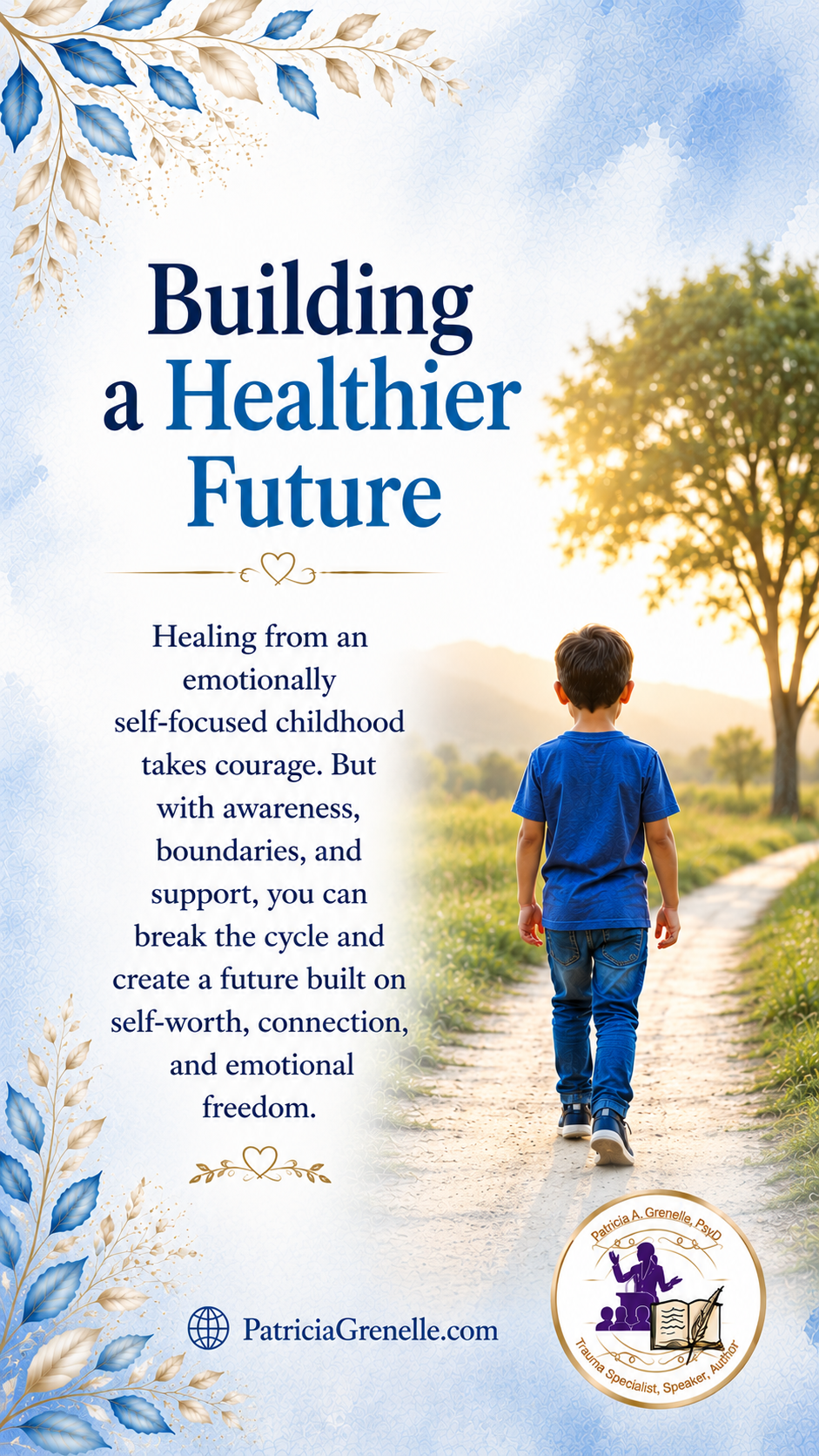
Healing doesn’t require pretending the past never happened.
It begins by acknowledging your experiences with honesty and compassion.
Some helpful steps include:
Learning about childhood trauma and family dynamics
Practicing healthy boundaries without apology
Developing self-compassion
Recognizing emotional triggers
Building relationships with emotionally healthy people
Working with a trauma-informed therapist if additional support is needed
Most importantly, remember that healing is not linear.
Some days you’ll feel strong.
Other days old memories or emotions may resurface.
That doesn’t mean you’re moving backward.
It means your nervous system is continuing to process experiences that may have been buried for years.
Progress often comes in waves.

You Are Not Broken
One of the greatest misconceptions trauma survivors carry is believing something is fundamentally wrong with them.
The truth is much kinder.
Many of the behaviors that frustrate you today—people-pleasing, hypervigilance, perfectionism, difficulty trusting yourself—were once brilliant survival strategies.
They helped you navigate circumstances no child should have had to manage.
Today, you have the opportunity to replace survival with healing.
That journey doesn’t happen overnight.
It happens one healthy choice, one boundary, one act of self-compassion at a time.
You deserve relationships where your voice matters.
You deserve to trust yourself.
And you deserve the peace that comes from understanding that your past may have shaped you—but it does not have to define your future.
About Dr. Patricia A. Grenelle
As a retired forensic psychologist with more than 40 years of experience and a survivor of childhood trauma, I am passionate about helping others understand the lasting effects of early emotional wounds. Through education, personal insight, and practical guidance, my goal is to help survivors replace confusion with understanding and move toward lives marked by resilience, hope, and healing.
If this article resonated with you, I invite you to explore additional trauma recovery resources, subscribe to my newsletter, and learn more about my memoir, We Were a Nice, Normal Family, at PatriciaGrenelle.com.


Comments